Tuesday, February 23, 2016

Political Action and Grassroots Organizing: Not for the Faint of Heart


The social work profession is closely connected to politics. Social workers and the populations we serve are directly effected by who is elected into political office and the decisions and legislation they pass. Now is an interesting time in America and the world for political action and grassroots organizing. With social media and the ability to connect with others in all corners of the globe more accessible than ever, we see the strength in the collective spirit to create big changes. As mentioned in the readings for this week, the power of grassroots organizing cannot be denied. Take for instance the protests in Egypt and other parts of the middle east in 2011. People coming together created a powerful force for political change in Egypt. Thousands of people came out to protest Egypt's political regime and as a result, created changes to benefit the greater population. Social work and politics can work hand in hand to make a difference and better the lives of vulnerable populations.
Protesters in Cairo's Tahrir Square, February 1, 2011
In thinking about this country and the current political cycle, we can study Bernie Sanders' presidential campaign as an example of the power of grassroots organizing. Coming up against a political system that is so often ruled by special interest groups, lobbyists, and "big money," Bernie Sanders' campaign has differentiated itself from the mainstream way in which most individuals come into public office. Though it is not easy for those who go against the norm, the power of this type of political action is undoubtable.
Bernie Sanders' Campaign Rally in Portland, ME, July 6, 2015
Social Action strategies of this nature create a fairer, more equitable playing field. Politicians like Bernie Sanders and his campaign showcase that grassroots organizing is possible and powerful. Political Action can also strengthen campaigns like this. If individuals in the community are empowered to register to vote and actually vote they gain a greater sense of connection with their communities and feel like a bigger part of their communities. Not only that, individuals will care more about political decisions that affect them and their families and will be more apt to contribute to their communities when they feel like their voices are being heard. 

Social workers should encourage the populations we work with to take action and advocate for change. Our profession can play a vital role in paving the way for individuals to have a voice.

Monday, February 8, 2016

The Effects of Globalization in our Local Communities


The business the United States does overseas has dire consequences for our local communities. When companies send work to countries across the globe, it affects the economic wellbeing of individuals all over the world. Citizens in this country lose their jobs since companies can feel they can pay employees lower wages in other countries. This creates even a larger divide between the have's and the have-not's in this country. It also puts social workers at the forefront of the negative effects globalization can have. Community practice can be a powerful force in working to create new opportunities for our citizens. Social workers not only protect people in our country but can work to advocate for workers' rights in countries being industrialized.


Locally, in thinking about the city of Portland and more broadly the state of Maine, there is a big push to "Buy Local" and support the local economy. Though it is on a much smaller scale than what one usually thinks of hearing "globalization," there is a strong correlation. Where individuals spend their money is a social justice issue. Money is kept in the community, locals are employed, locals purchase from local businesses, and the cycle continues. Though there have been positive effects of globalization, one cannot ignore the negative consequences. When communities are self-sustaining, everyone benefits. Social work and economics are not mutually exclusive.

Tuesday, January 26, 2016

Social Work and Shifting Priorities of Our Modern World


Our world is constantly changing. We live in a time and place in which value is placed on the next innovation, the speed with which we can achieve our goals and daily tasks, and quick and easy fixes for every day problems and crises. Despite the constant growth in technology and new developments in science and the medical field, the code we cannot seem to crack is the one that leads to a prosperous, healthy, happy life for all our citizens. While much attention is paid to war and the threat of terrorism from abroad, there is little focus on the very real, disastrous things happening in our own country. Poverty, racism, classism, and inadequate resources for our most vulnerable citizens has not gone away. Innovation has not existed in this area. With the priorities of our politicians so often shifting away from these issues, it falls on the shoulders of the social work profession to create change and advocate for these individuals and the challenges they face.

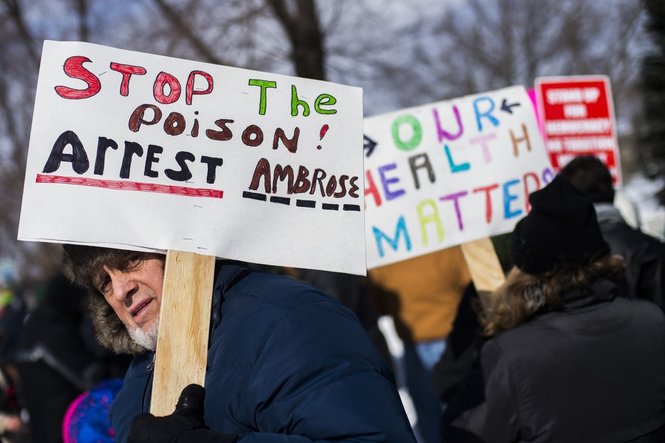
Take the current water crisis in Flint, Michigan, for example. The state and local government went for months allowing their residents (a vast majority living below the national poverty line and being people of color) to drink water with lead in it to save money. This incident is bringing into the national spotlight once again that communities that are low-income with minority populations do not get the respect and attention they deserve, especially in times of crisis.


So often racism and classism is not as overt as the situation in Flint. It is insidious. In order for change to occur in these communities within the framework of our modern world and its shifting priorities, we must mobilize community members effected by these issues to be advocates. The role of social workers must be to empower these individuals by finding ways in which their voices can be heard. This is truly how community practice must function in order to be successful.